A 26 years old female patient was referred by obstetrician for anomaly scan
Ultrasound findings and discussion:
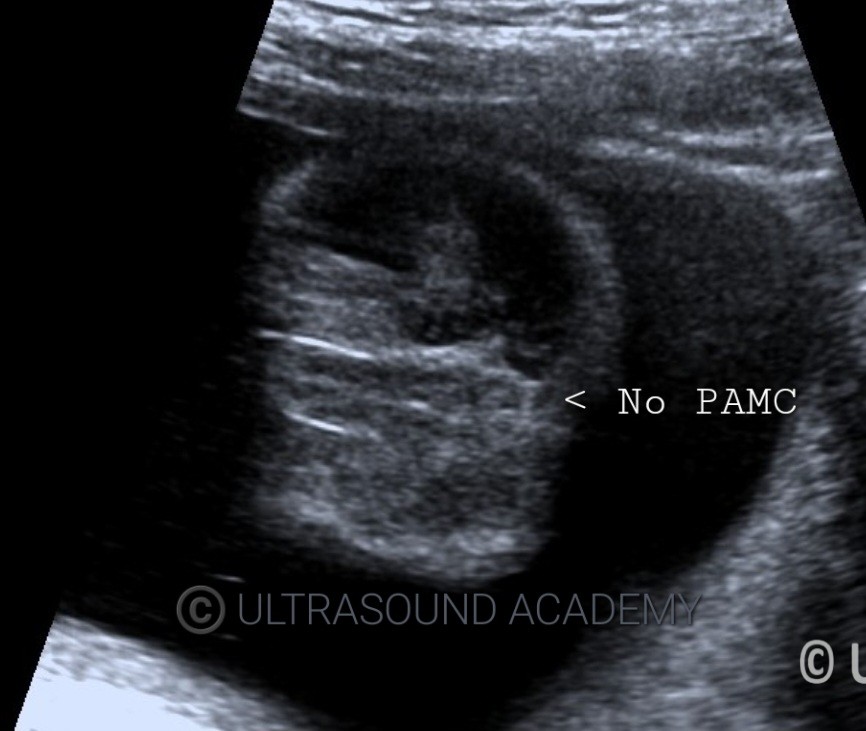
In this case we cannot see perianal muscular anal complex(PAMC).
This is an indirect finding of anal atresia .
There was no any associated major structural abnormality.
So, diagnosis of anal atresia is given.
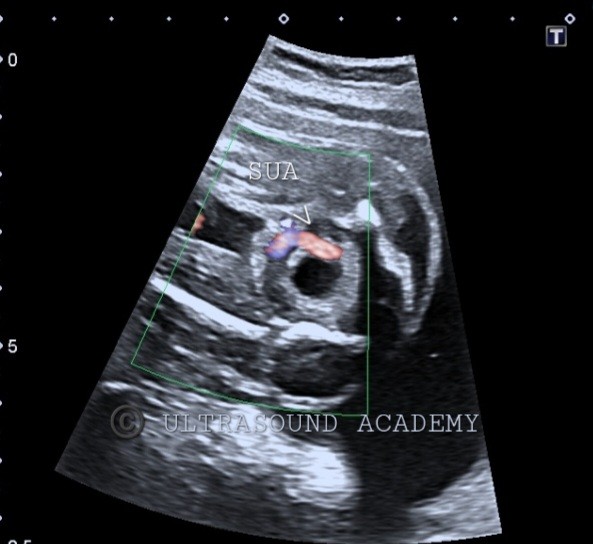
There is also associated single umbilical artery.
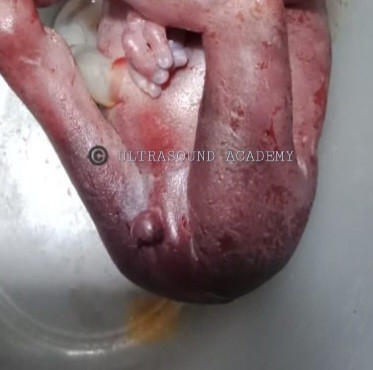
In abortus we cannot find anal opening.
Anal atresia
Anal atresia (imperforate anus) is a congenital anomaly where the anal opening is absent or abnormally positioned, leading to obstruction of stool passage. It can occur as an isolated anomaly or as part of syndromic associations, such as VACTERL (Vertebral, Anorectal, Cardiac, Tracheoesophageal, Renal, Limb anomalies).
Prenatal Ultrasound Findings
Anal atresia is difficult to diagnose prenatally because direct visualization of the anal opening is not possible. However, indirect ultrasound signs may suggest the condition.
Dilated Fetal Bowel (Intestinal Obstruction)
Prominent, dilated loops of bowel seen in the lower abdomen.
Hypoechoic fluid-filled intestines may indicate intestinal obstruction due to absent anal opening.
Dilated Rectum (Rectal Pouch Sign)
Enlarged, fluid-filled, blind-ending rectal pouch seen in the lower pelvis on sagittal and transverse views.
Best detected in third trimester.
Absent Normal Hypoechoic Anal Canal
Normally, the anal canal appears as a hypoechoic structure posterior to the bladder.
In anal atresia, this structure is absent.
Polyhydramnios (Excess Amniotic Fluid)
Seen in high-type atresia, where fistulas prevent normal swallowing and absorption of amniotic fluid.
Associated Urogenital or Spinal Anomalies
Renal anomalies (hydronephrosis, absent kidney).
Vertebral anomalies (sacral agenesis, hemivertebrae).
Genital anomalies (vaginal atresia, cloacal malformations).
Classification Based on Imaging
|
Type
|
X-ray/US Findings
|
Fistula Association
|
Surgical Approach
|
|
Low-Type Anal Atresia
|
Rectal pouch close to perineum (<1 cm on X-ray), No major distension
|
No fistula or perineal fistula
|
Anoplasty (simple repair)
|
|
High-Type Anal Atresia
|
Rectal pouch far from perineum (>1 cm on X-ray), Dilated bowel
|
Recto-urethral or recto-bladder fistula
|
Colostomy + PSARP
|
Syndromic Associations (VACTERL & Others)
|
Syndrome
|
Associated Anomalies
|
|
VACTERL
|
Vertebral, cardiac, tracheoesophageal, renal, limb anomalies
|
|
Currarino Triad
|
Sacral agenesis, presacral mass, anal atresia
|
|
Down Syndrome
|
Duodenal atresia, congenital heart defects
|
Prognosis and Management
- Low-type anal atresia → Good prognosis with early repair (Anoplasty).
- High-type anal atresia → requires staged surgeries (Colostomy → PSARP).