ASHERMAN UTERINE SYNECHIA ARTERY – Case By Dr. Nitin Jadhav
History:
Patient came with the history of amenorrhea and infertility,past history of surgery such as dilation and curettage (D&C).
Ultrasound Findings :
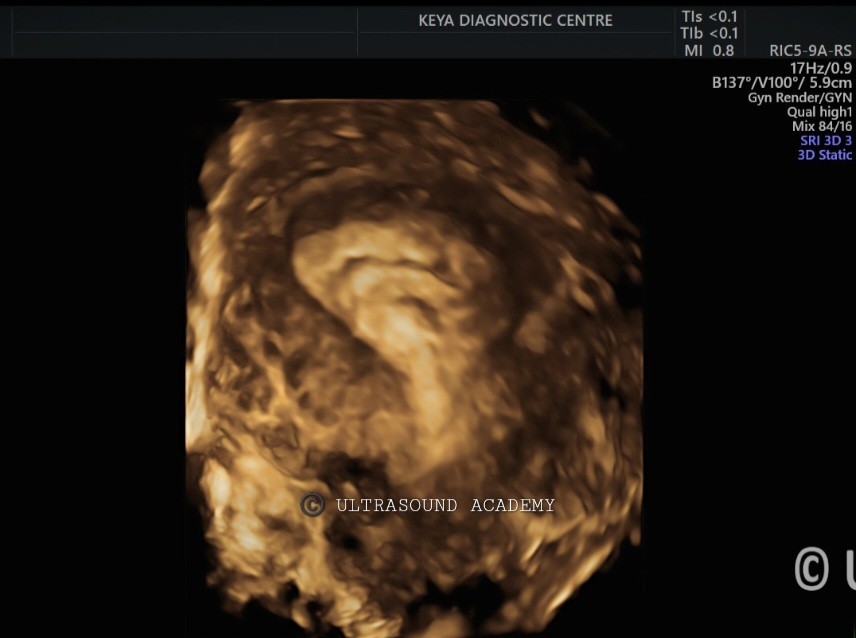
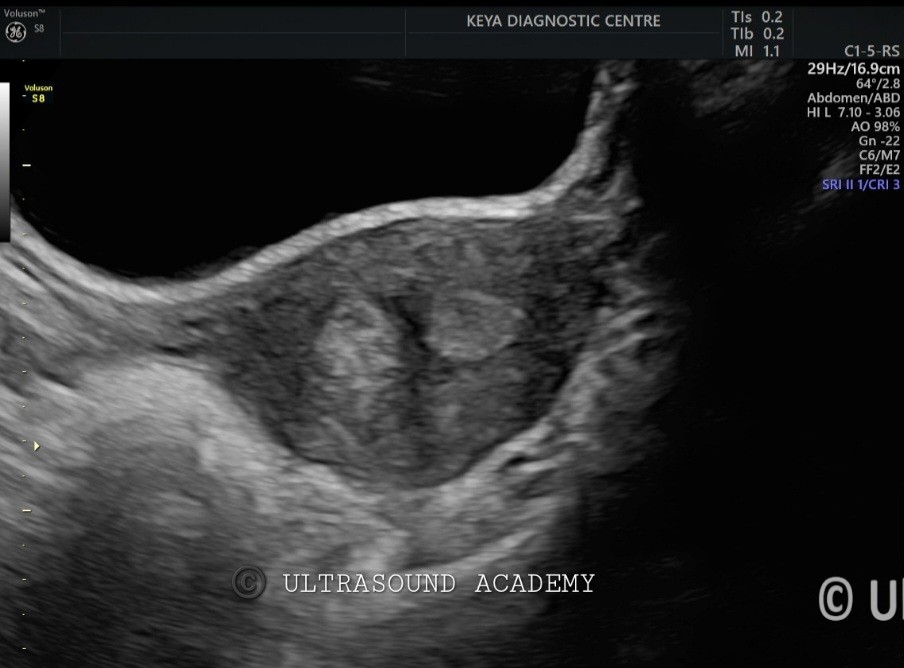
● The above image is of 2D,3D uterus and transvaginal ultrasound reveals normal sized uterus, but with irregular or obliterated endometrial lining which is the discontinuity in endometrial stripe.
● Hyperechoic bands traversing the uterine cavity. These bands may cause partial or complete obliteration of the endometrial cavity.
Other findings and description:
● Endometrial Stripe is thinned or not visualized, often below 2 mm replaced by hyperechoic bands.
● Failure of uterine distension with saline during a sonohysterogram (Saline Infusion Sonohysterography, SIS) indicates adhesions.
● Asherman syndrome is diagnosed primarily through imaging findings on ultrasound and clinical symptoms such as amenorrhea or hypomenorrhea following uterine surgery.
Diagnosis:
Asherman syndrome
Differential Diagnosis:
1. Endometrial Atrophy: Can cause thin endometrium, common in postmenopausal women but lacks the intrauterine adhesions seen in Asherman syndrome.
2. Chronic Endometritis: May also present with abnormal endometrial appearance and adhesions but is associated with inflammation and may show fluid collection within the endometrium.
3. Uterine Synechiae: Similar findings but often occurs after cesarean section without a history of intrauterine procedures like D&C.
Discussion:
● Asherman syndrome is an important consideration in women with a history of intrauterine surgery who present with menstrual irregularities or infertility. Imaging plays a vital role, particularly with saline infusion sonography, which can better demonstrate intrauterine adhesions and endometrial distortion.
● Severe uterine infections like tuberculosis or endometritis can also lead to adhesions.
● Prior radiation therapy to the pelvic area can cause intrauterine scarring.
Conclusions:
Ultrasound, especially sonohysterography, is critical in diagnosing Asherman syndrome by revealing endometrial scarring and adhesions. Early diagnosis and treatment, often through hysteroscopic adhesiolysis, can restore normal uterine function and fertility.
error: Content is protected !!