This patient missed anomaly scan. Referred to ultrasound at 30 wks.
USG FINDINGS:
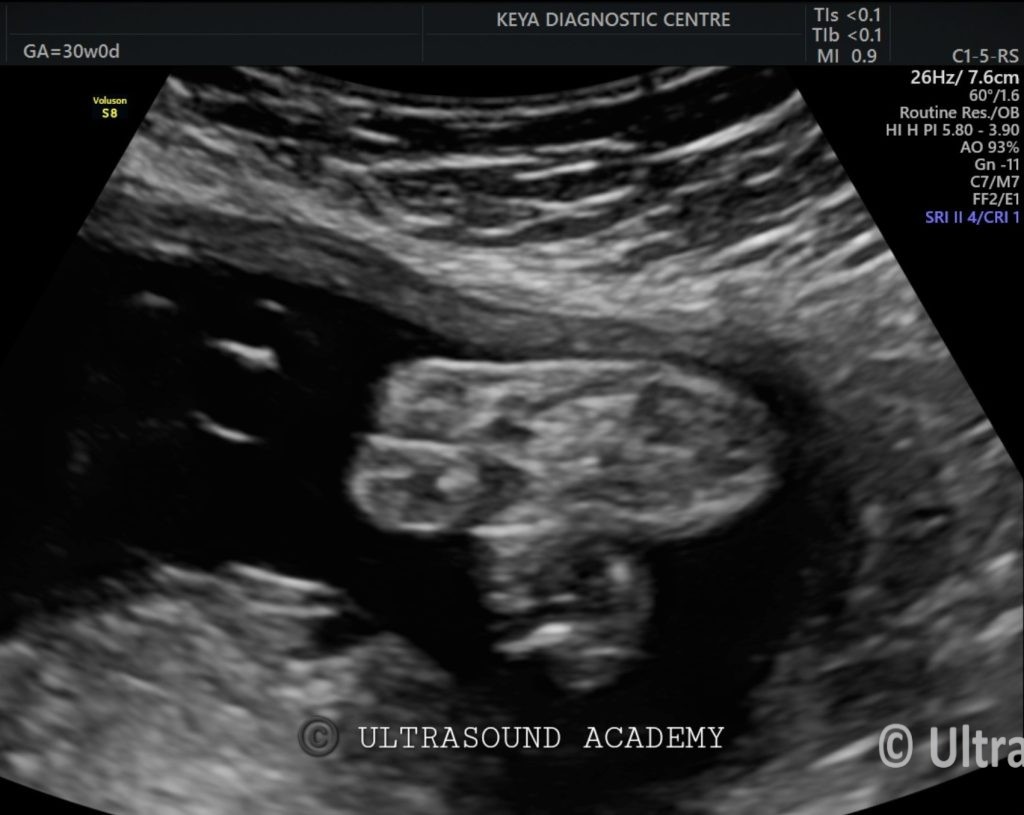
Deformity is noted in both Lower limbs.
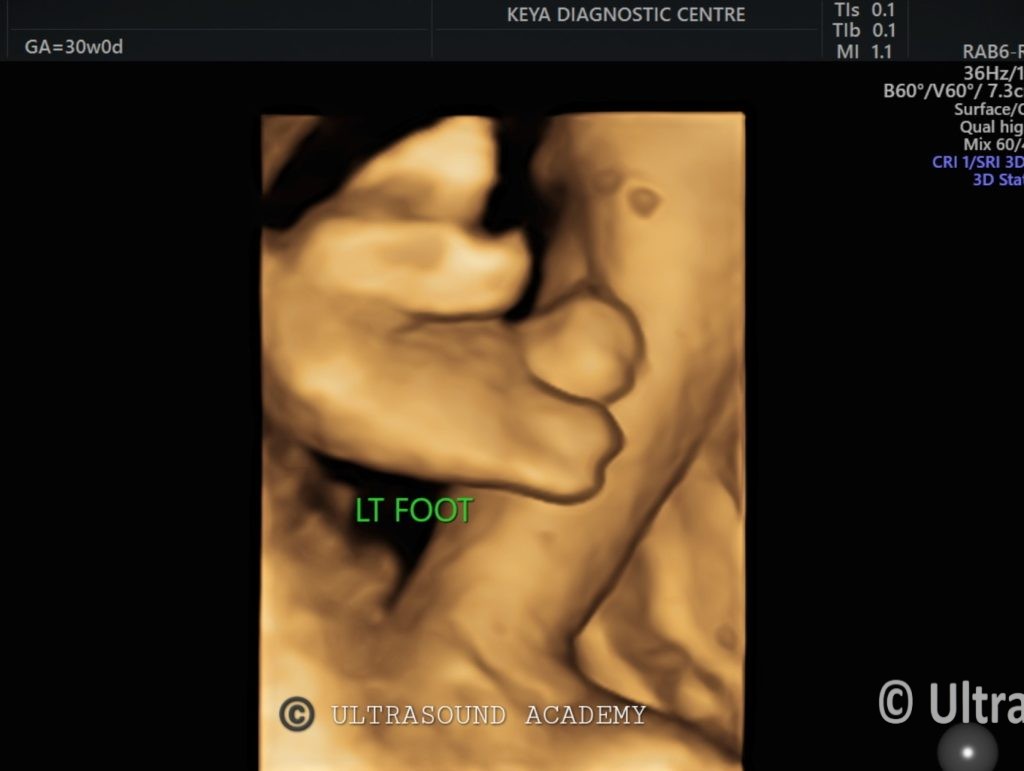
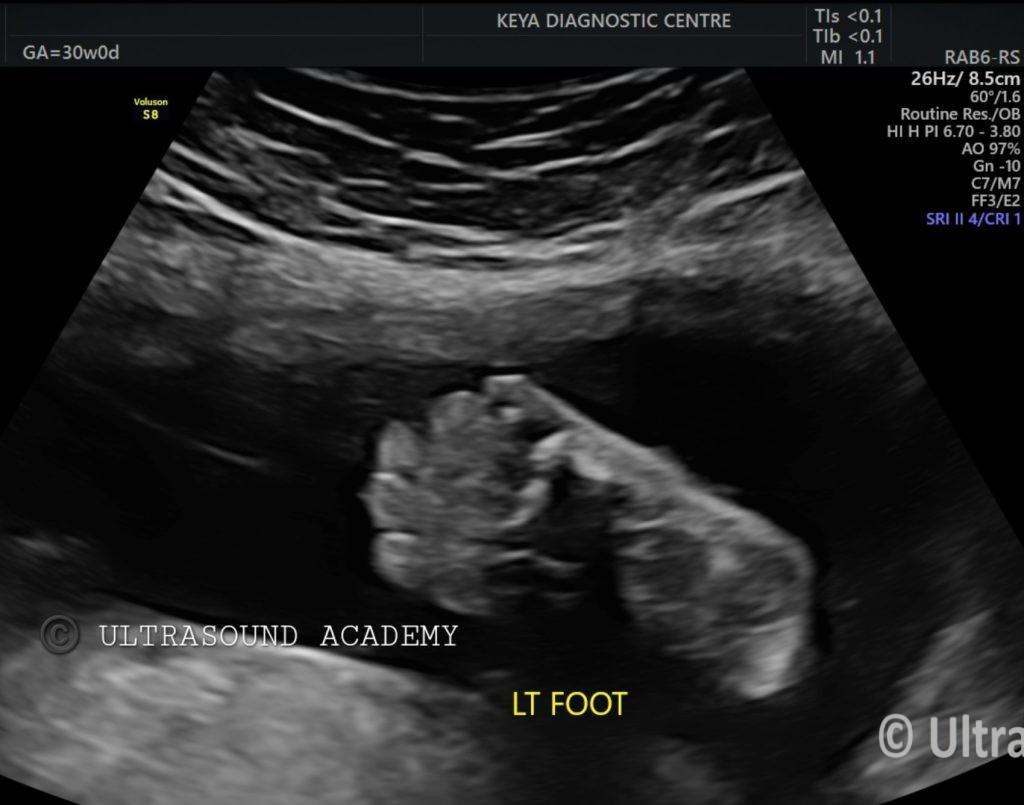
Amputation of great toe and adjacent toes seen in left foot.
Right foot also appears deformed with only 2-3 toes are seen.
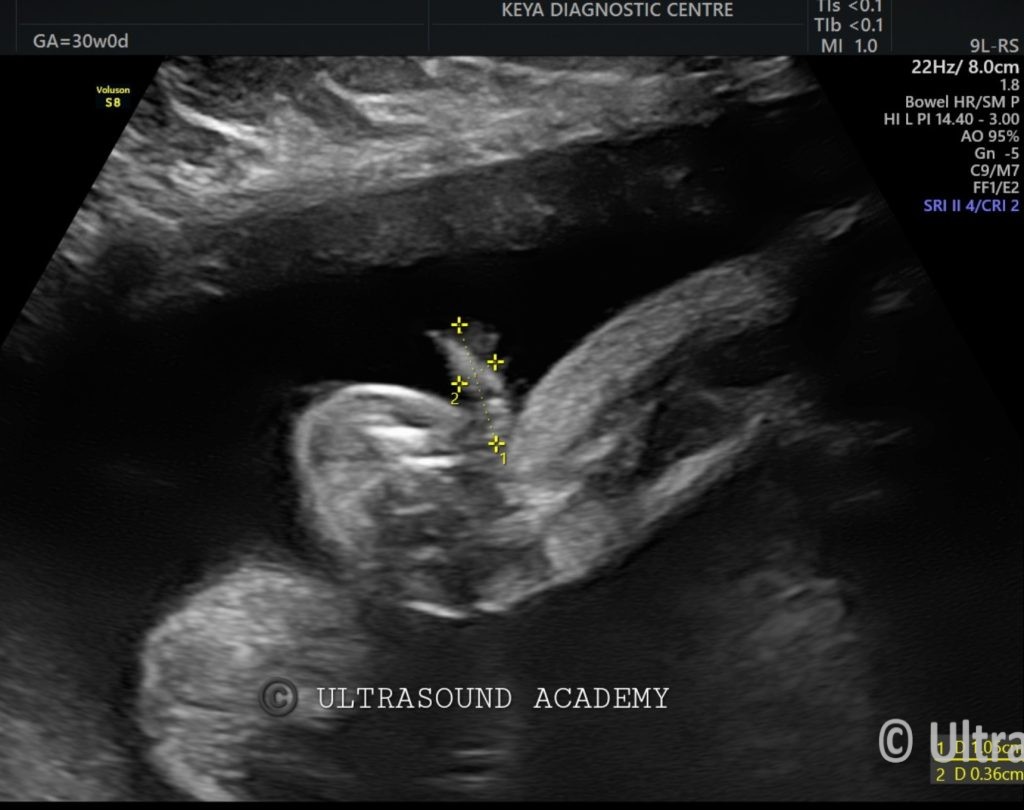
Echogenic band like structure is seen at distal part of right leg.
These findings are suggestive of Amniotic band syndrome.
No other anomalies noted in fetus.
Amniotic Band Syndrome (ABS) is a rare congenital condition caused by fibrous bands from the amniotic sac entangling fetal parts, leading to various abnormalities such as limb deformities, facial clefts, or even intrauterine fetal demise.
Ultrasound Findings of Amniotic Band Syndrome
A detailed prenatal ultrasound can help in diagnosing ABS. Here are the key features seen on USG:
Amniotic Bands
Thin, echogenic strands seen floating in the amniotic fluid.
May be attached to the fetus, restricting movement or causing deformities.
Constriction Rings and Limb Deformities
Narrowed, constricted areas around extremities, which can lead to swelling distal to the band.
Limb reduction defects (e.g., missing fingers, toes, or entire limbs).
Asymmetrical Anomalies
Unlike genetic syndromes that affect both sides symmetrically, ABS typically results in unilateral or asymmetric deformities.
Craniofacial Defects
Cleft lip/palate.
Asymmetrical facial deformities due to restricted growth.
Body Wall Defects
Abdominal wall abnormalities, such as gastroschisis (organs protruding outside the abdomen).
Thoraco-abdominal disruptions in severe cases.
Joint Abnormalities
Arthrogryposis (joint contractures) due to lack of movement in affected limbs.
Differential Diagnosis
Amniotic Sheet (caused by uterine synechiae): Unlike ABS, amniotic sheets do not attach to the fetus or cause deformities.
Limb-Body Wall Complex (LBWC): More severe than ABS, often associated with large body wall defects and short umbilical cord.
Prognosis and Management
Mild Cases: May only require postnatal surgical correction of limb deformities.
Severe Cases: If major organ involvement is detected, prognosis may be poor. Intrauterine fetal surgery has been attempted in select cases to release bands.