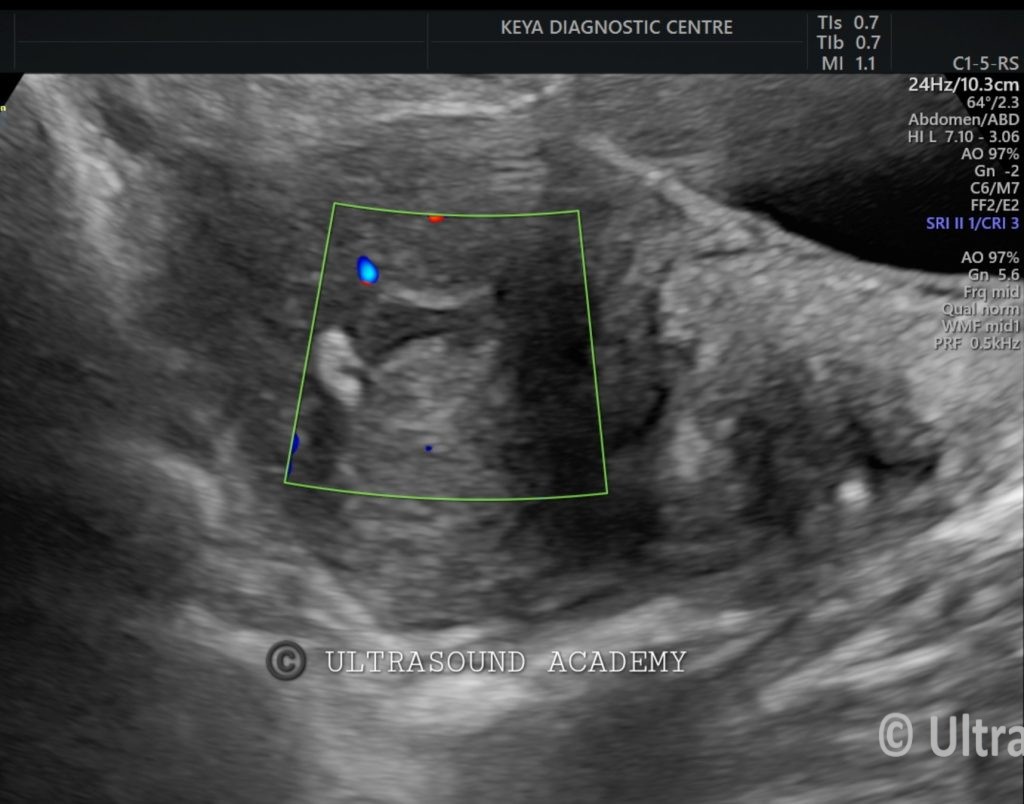
Endometritis :Itdefined as an infection or inflammation of the endometrium. Endometritis is of two types: acute and chronic.
Acute endometritis is the symptomatic acute inflammation of the endometrium, which upon examination with a microscope shows micro-abscess and neutrophil invasion in the superficial endometrium. One of its most common manifestations is postpartum endometritis.
Chronic endometritis is a silent disease usually diagnosed on the workup of secondary amenorrhoea and infertility. An important cause of chronic endometritis is tuberculosis, especially in developing nations. Chronic and acute endometritis have been associated with poor reproductive outcomes.
Ultrasound of endometritis appearance of the uterus and endometrium may be normal in early stages however, findings may include:
loss of a welldefined interface between the endometrium and myometrium – Endomyometrial Junction Indistinctness (EMI) sign.
chronic endometritis may present with a thin endometrium with hyperechoic areas that represent foci of calcification or fibrosis, irregular endometrial lining; 4D USG shows irreversible sequelae of fibrosis and scarring or intrauterine adhesions (Asherman’s Syndrome). On saline infusion sonography, intrauterine adhesions appear as linear echogenic bridges in the fluid filled uterine cavity; this is a good technique to diagnose Asherman’s syndrome.